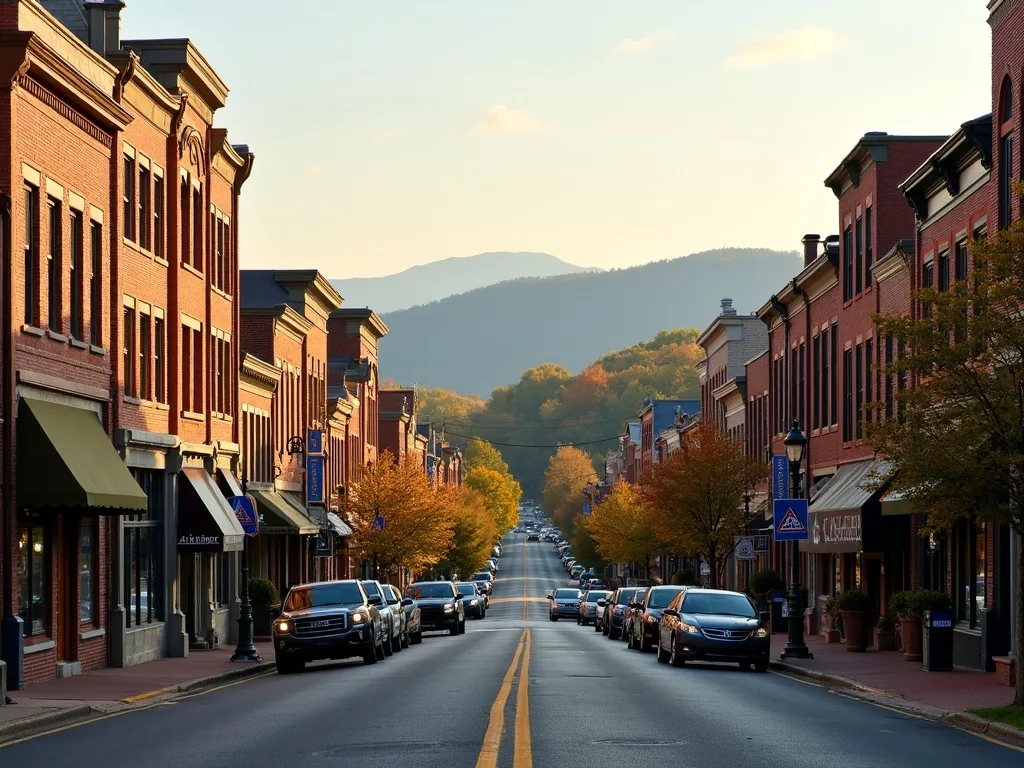
Danville, Virginia
A historic river city where tobacco warehouses have become restaurants, a casino has arrived, and the Dan River runs through it all.
A River City Reinventing Itself
Danville sits on the banks of the Dan River in Pittsylvania County. It is about 1.5 hours south of Lynchburg and just a few miles from the North Carolina border. Roughly 40,000 people live here, and the city has lived several lives of its own. For much of the 19th and 20th centuries, Danville was one of the largest tobacco markets in the world. The huge brick warehouses that line the downtown streets are proof of how much money that era brought in. Textiles came next. At its peak, Danville was home to Dan River Inc., one of the biggest textile makers in the country. When both industries faded, the city took the same hard economic hit that struck manufacturing towns across the South. Storefronts went dark. The population dropped. For a while, Danville seemed to be fading.
That story has changed sharply in recent years. Danville is in the middle of a real revival. It is driven by steady investment in the historic downtown, a growing food and arts scene, and a major new entertainment destination that has reshaped the regional economy. The change is not just paint and signs. You can see it in the restored buildings and the new businesses. You can see it in the young owners who chose to open their first restaurants and studios here instead of in a bigger city. And you can feel it in the energy on streets that were quiet for decades. Danville is not trying to be something it is not. It is building on what it already has: the river, the old architecture, and the scale of a small Southern city. The result feels genuine in a way that many rebuilt downtowns do not.
History That Shaped a Nation
Danville's place in American history goes well beyond tobacco and textiles. In April 1865, in the final days of the Civil War, the Confederate government fled Richmond. President Jefferson Davis and his cabinet moved to Danville and set up the Sutherlin Mansion as a temporary seat of government. For about a week, Danville served as the last capital of the Confederacy, until Davis fled south and the war effectively ended. Major William T. Sutherlin built the mansion, a striking Italianate home, in 1857. It is preserved today as the Danville Museum of Fine Arts and History. The collection includes Civil War artifacts and period furnishings. Its exhibits tell Danville's history from several sides, including the lives of enslaved people and the Black community during and after the war. The building itself, with its detailed plasterwork and original features, is worth a visit for the craftsmanship alone.
The rest of Danville's old architecture tells a broader story. The Millionaire's Row district along Main Street holds a run of grand Victorian and early 20th-century homes. They reflect the wealth the tobacco trade brought in. The old tobacco warehouses downtown, some covering whole city blocks, have been turned into restaurants, loft apartments, event spaces, and studios. The scale of these buildings is impressive. Their thick brick walls, heavy timber frames, and wide-open interiors speak to an era of industrial ambition that shaped the city for more than a century.
The River District and Danville's Growing Food Scene
The River District is the heart of Danville's comeback. It sits on the blocks around Main Street and the Dan River waterfront. A growing mix of restaurants, breweries, coffee shops, art galleries, and boutiques has moved in. Together they turned a mostly empty downtown into a walkable place with real character. The restaurants run from upscale farm-to-table to casual barbecue and comfort food, and several have earned regional praise. Breweries and taprooms have become the social anchors of the district. They serve craft beer in old warehouse spaces that show off exposed brick, high ceilings, and original hardwood floors.
Tank Town, an arts venue in a former industrial space, hosts live music, art shows, and community events that draw people from across Southside Virginia. AAF International is a modern and contemporary art gallery with a surprisingly bold collection for a city this size. Its rotating shows bring national and international work to the region. The mix of food, drink, art, and live music gives the River District a creative energy that sets it apart from other small-city revival stories in the state. This is not a district built on chains and franchises. It runs on local owners, local creativity, and a willingness to bet on a city that many people had written off.
Caesars Virginia: A Regional Game Changer
The opening of Caesars Virginia in 2024 was a turning point for Danville and the wider region. The current casino is a temporary building. A full resort with a hotel, conference center, and more entertainment will replace it. Even so, it has already brought a wave of new visitors to a city that once relied on pass-through traffic. Caesars runs table games, slot machines, a sportsbook, and on-site dining, and it pulls guests from across Virginia, North Carolina, and nearby states. If you are staying near Lynchburg, Caesars adds a major night out within a 90-minute drive. Pair a casino visit with a meal in the River District and Danville makes an easy day trip or overnight stay.
The casino's effect on the wider economy shows up all over Danville. New hotels, restaurants, and service businesses have opened or grown to meet the added traffic, and the city's tax revenue has climbed. When the full resort is done, it should push development even faster and lock in Danville's spot as a regional entertainment hub. If you last saw Danville five or ten years ago as a quiet, sleepy city, the pace of change now is striking.
The Dan River: Outdoor Recreation in the Heart of the City
The Dan River is Danville's defining natural feature. As the riverfront has been built out for recreation and public use, it has moved to the center of the city's identity. The Dan River Riverwalk Trail runs along the bank through the heart of the city. It is a paved path for walking, jogging, and cycling, with views of the river, the historic mills, and the downtown skyline. The trail links several parks and river access points, and it is one of the most pleasant urban trails in Southside Virginia.
The Dan River is also popular for kayaking, canoeing, and tubing. Several outfitters rent gear and run shuttles in the warmer months. Through the Danville stretch the current is mostly mild, so it works for beginners and families, while stronger paddlers can find faster water upstream. Fishing is good year-round. Smallmouth bass, catfish, and sunfish are the most common catches. Dan Daniel Memorial Park, on the river's north side, is one of the largest city parks in the region, with sports fields, a disc golf course, walking trails, and picnic areas across hundreds of acres. Anglers Park adds dedicated fishing access on a quieter stretch of the river.
Danville's cost of living is among the lowest in Virginia, which makes it one of the most affordable cities in the state by almost any measure. Housing prices in particular stay well below state averages. And the housing itself, especially the historic homes on and around Millionaire's Row, has a level of character that would cost far more in most other markets. Pittsylvania County, which wraps around the city, adds rural options for anyone who wants more space. From a base in Lynchburg, Danville is far enough to feel like a real change of scenery but close enough for an easy day trip. For a longer stay, the mix of low cost, river access, a reviving downtown, and the new entertainment economy around Caesars Virginia makes Danville one of the more interesting small cities in the state right now.