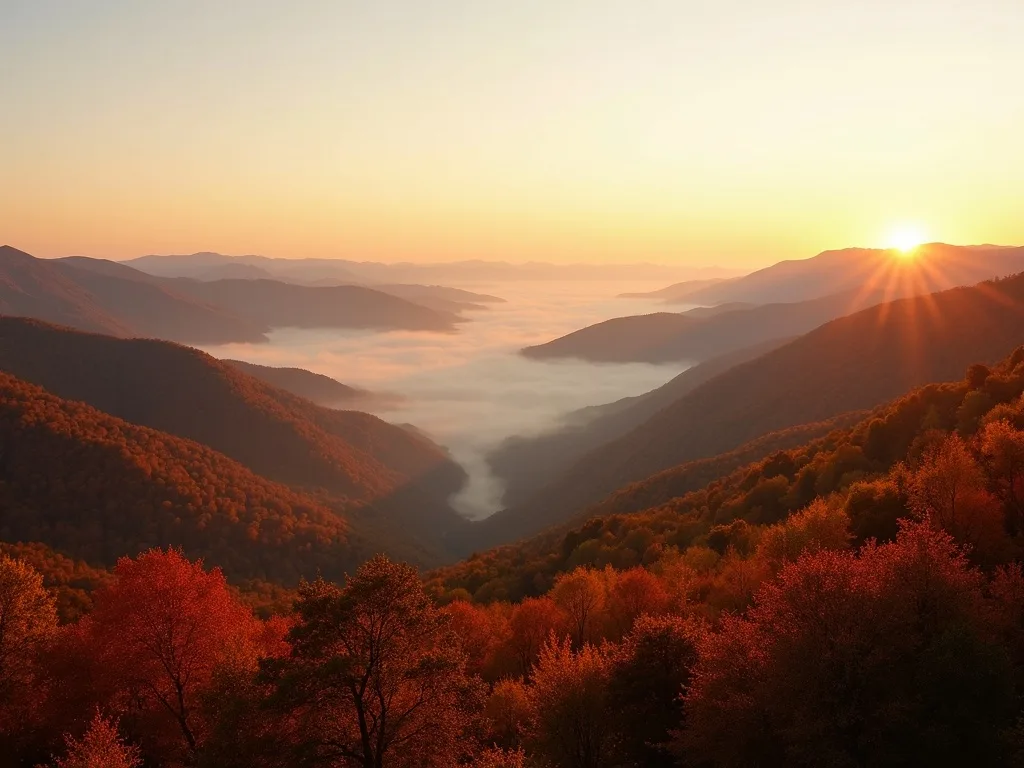
Roanoke, Virginia
The Star City of the South. Where the Appalachian Trail meets a thriving downtown, and mountain culture runs deep.
The Star City of the South
Roanoke is the largest city in western Virginia, with just over 100,000 people and a metro area about three times that size. It sits in the Roanoke Valley with mountains in every direction. The Star City nickname comes from the 88.5-foot lit star on top of Mill Mountain, a beacon you can see for miles and one of the best-known landmarks in the state. But the name fits for deeper reasons too. Roanoke has become the economic and cultural anchor of the whole Blue Ridge region. It draws hikers, healthcare workers, young families, and remote workers who want a real city with real mountains right out the door.
What sets Roanoke apart from most American cities is its tie to the Appalachian Trail. The AT runs straight through the metro area. This is one of the only places in the country where a 2,200-mile wilderness path meets a city. You can drive 20 minutes from a downtown brewery to a trailhead on the same route that runs from Georgia to Maine. That closeness to wild land is not a slogan here. It is the core of daily life for a big share of residents, and it shapes everything from the economy to the restaurants to the kind of people who move here.
Roanoke sits about an hour west of our property in Lynchburg, making it a natural day trip or a stop on a broader Blue Ridge itinerary. Smith Mountain Lake is roughly 40 minutes south, sitting in the valley between the two cities, so combining Roanoke with a lake day is easy.
Quick Facts
Virginia's Triple Crown and the Outdoor Culture
The hiking around Roanoke is not just good for the region. It matters on a national level. Three headline trails within a short drive form what hikers call Virginia's Triple Crown: McAfee Knob, Dragon's Tooth, and Tinker Cliffs. McAfee Knob is the most photographed point on the whole 2,200-mile Appalachian Trail, a dramatic rock ledge that juts out over the Catawba Valley and has become one of the iconic images of East Coast hiking. Dragon's Tooth is a tougher scramble up to a jagged rock spire. Tinker Cliffs is a long ridgeline walk with wide-open views. Strong hikers can link all three in one long day, but most people take them one at a time. All three trailheads are within 30 minutes of downtown.
Beyond the Triple Crown, Carvins Cove is the gem of Roanoke's local trails. It is the second-largest city park in the United States, with more than 60 miles of trails looping around a 630-acre reservoir. The International Mountain Bicycling Association named it a Silver-Level Ride Center, one of only a handful in the eastern U.S. The trail network suits everyone, from casual walkers to serious mountain bikers training for endurance races. On most weekends the Cove is full of runners, hikers, anglers fishing the reservoir, and cyclists working the singletrack.
You can reach the Blue Ridge Parkway from several points near Roanoke. Mill Mountain, the hill where the famous star stands, has its own trails and a small zoo that families love. The outdoor setup here is not an afterthought. The city has put real money into greenways, trail upkeep, and links between the streets and the wild, and it shows.
Downtown, the City Market, and the Food Scene
Roanoke's downtown has truly changed over the past two decades. The anchor is the Historic City Market, the oldest open-air market in Virginia still running, in business since 1882. Vendors sell Shenandoah Valley produce, local meats, flowers, baked goods, and crafts in an open hall lined with restaurants and shops. It feels genuine because it has been here for nearly 150 years, not because someone built it to look that way.
The craft beer scene has taken off. There are now more than 12 breweries in the metro area, and the quality is serious. Deschutes Brewery, one of the most respected craft brewers in the country, picked Roanoke for its only East Coast tasting room. That choice told the industry the city had arrived as a beer destination. Big Lick Brewing, Starr Hill's Pilot Brewery, and a lineup of smaller shops round out a scene where you can spend a whole afternoon walking between taprooms downtown. The food has grown with the beer. Restaurants now lean on the farms of the Shenandoah Valley, the local cheesemakers, and heritage livestock, for menus you would not have found here a decade ago.
The Taubman Museum of Art, a striking modern building by Randall Stout, holds traveling shows and a strong permanent collection of American art. Center in the Square is a multi-story cultural complex with a science museum, a theater, and the Roanoke Pinball Museum, a quirky local favorite. The arts scene here is bigger than you would expect for a city this size, partly because Roanoke has always been a regional hub, and partly because the recent wave of creative professionals has raised the bar.
Healthcare, Education, and a Growing Economy
Roanoke's economy has broadened a lot, but healthcare is still the backbone. Carilion Clinic runs a Level 1 trauma center and is the largest employer in the region. Its wide medical campus has become a magnet for doctors, researchers, and allied health workers. Carilion's partnership with Virginia Tech created the Virginia Tech Carilion School of Medicine and a biomedical research institute. That brought graduate-level academic energy into the city and a steady flow of young, educated residents who more and more choose to stay.
Virginia Tech's main campus in Blacksburg is only about 30 minutes southwest. The university's growing footprint in Roanoke, through the medical school and research labs, has blurred the line between the two communities. The result is a rising healthcare and technology corridor along the I-81 spine that is pulling in investment and talent from larger metros. Remote workers have found Roanoke in real numbers too, drawn by fiber internet, a low cost of living, and the outdoor lifestyle.
The cost of living stays well below the national average, especially housing. Neighborhoods like Old Southwest, with its Victorian homes and tree-lined streets, and South Roanoke, one of the most walkable areas in the region, have homes that would cost two or three times as much in similar-sized East Coast cities. Roanoke County's suburbs add newer construction and strong schools. Low cost, plus the outdoor access and the growing job market, is the main reason Roanoke keeps landing on "best places to live" lists, and why its population is climbing again after decades of standing still.