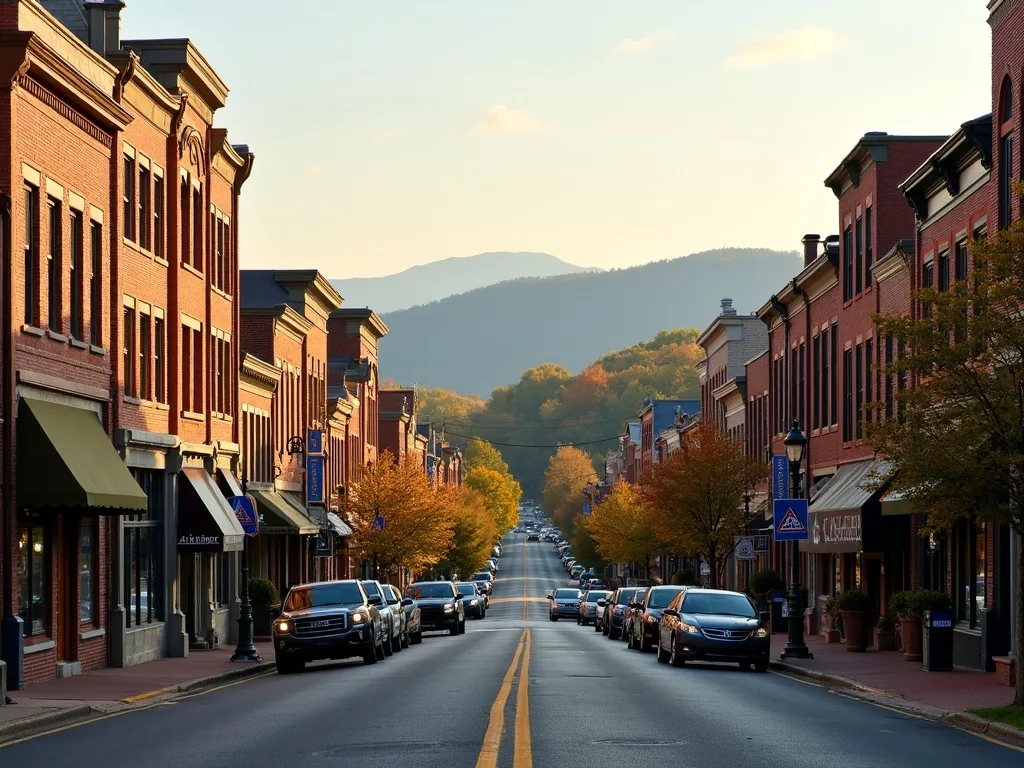
Lynchburg, Virginia: The Hill City
Seven hills, four colleges, the James River, and a quality of life that Northern Virginia commuters can only dream about.
Why People Are Choosing Lynchburg
Lynchburg sits right where Virginia's Piedmont plateau meets the Blue Ridge Mountains, spread across the James River in the center of the state. Locals call it the Hill City, and they mean it. Seven named hills rise from the river, each topped by its own neighborhood, and the architecture on each one tells a different chapter of the city's 238-year story. About 84,000 people live here, and the metro area does far more than its size suggests in education, healthcare, outdoor recreation, and a food scene that has quietly become one of the most talked-about in the state.
For most visitors, the reason to come is Liberty University, about 4 minutes from our property. Graduation weekends, College for a Weekend events, Convocation, and Flames athletics bring tens of thousands of families through town every year, and hotels fill up months ahead. But more and more guests arrive for a different reason. They heard about the trails, the breweries, the historic districts, and the low cost of living, and they want to see if this is where they should move next.
That relocation story is real. Remote workers who spent years driving two hours each way into Northern Virginia or the DC metro have found that Lynchburg offers the same career flexibility at a fraction of the housing cost. Here the commute is measured in minutes, not hours. The stress drops the moment you turn off Route 29 and see mountains instead of Beltway traffic. Families come for strong schools, a low crime rate, real community, and the kind of neighborliness that larger metros lost decades ago.
Beyond the colleges, Lynchburg is a base camp for some of Virginia's most important historical sites: Thomas Jefferson's Poplar Forest retreat, the National D-Day Memorial in Bedford, and Appomattox Court House, where the Civil War ended. The best Blue Ridge Parkway overlooks are a 25-minute drive from downtown. This is not a city you pass through. It is one you settle into.
Quick Facts
Neighborhoods Worth Knowing
Lynchburg's identity lives in its neighborhoods. Each hill developed its own character over two centuries, and the differences remain vivid today. Whether you are visiting for a weekend or scouting a future address, these are the districts that define the city.
Diamond Hill
Diamond Hill is Lynchburg at its most dramatic. Victorian and Queen Anne homes climb the hillside in tight rows. Their turrets and wraparound porches were restored by artists, musicians, and preservationists who started reclaiming the neighborhood decades ago. Today it is two things at once: a living museum of late-1800s architecture and an active artist community, where studios and galleries fill the same buildings that once held tobacco merchants. Walking Diamond Hill on a spring evening, with dogwoods blooming against painted facades, is one of the most striking city scenes in Virginia.
Garland Hill
If Diamond Hill is Victorian flair, Garland Hill is Federal calm. The homes here are older, with the balanced fronts, fanlights, and brick detail that defined American design in the early 1800s. Many have been carefully restored by owners who know they are caretakers of something that cannot be replaced. Together, Garland Hill and Diamond Hill form what locals call the living museum of Lynchburg architecture, a pair of districts where every block rewards a slow walk.
Rivermont
Rivermont Avenue is one of the grand residential streets of the American South. It runs from downtown toward Randolph College, lined with Tudor, Georgian, and Colonial Revival homes set behind old oaks and deep front lawns. This is old Lynchburg money, but it wears it quietly. The avenue is a destination in itself. Joggers, dog walkers, and families stroll the wide sidewalks past homes whose scale and craft recall a time when architects built to last. Randolph College anchors the western end and adds a bit of campus energy to the street's calm.
Boonsboro
South of the city center, Boonsboro is where roomy brick homes sit on large lots, many backing onto woods that feel more rural than suburban. The Lynchburg Country Club is the social hub of this well-off area. Its quiet, tree-shaded streets draw families who want strong schools and a sense of permanence without the airs of a gated community. Boonsboro residents tend to stay for decades, which tells you all you need to know about life here.
College Park
College Park buzzes with the energy of Liberty University, whose campus spreads out just to the south. The housing is modern and mixed, from new townhomes to apartments and single-family homes that suit students, young professionals, and university staff. Restaurants, coffee shops, and services have grown with the campus, so the area feels alive at all hours. If you are visiting Liberty for any reason, College Park is the ring right around it, and the energy is catching.
Wyndhurst
Wyndhurst is Lynchburg's take on new urbanism, a planned community that got the formula right. A walkable town center with shops, restaurants, and a grocery store acts as the social hub. The streets around it mix single-family homes, townhomes, and condos in a layout built to reward walking over driving. It feels modern without feeling generic, and the careful landscaping and design rules give it a unity most planned communities never reach. For visitors coming from suburban sprawl, Wyndhurst is an eye-opener.
Four Colleges, One City
Lynchburg is one of the most education-heavy small cities in Virginia. Four colleges and universities shape the culture, the economy, and the year-round event calendar. For vacation rental guests, the school calendar is the lodging calendar. Graduations, family weekends, sports, and campus visits send waves of demand through the city from September through May, and they peak in spring.
Liberty University
Liberty is the largest university in Virginia, with more than 15,000 students living on campus. What began as a small Bible college is now a large campus of academic buildings, athletic facilities, and residence halls. It is the single biggest source of visitor traffic in the Lynchburg metro, and its effect on lodging demand is hard to overstate.
Graduation weekend is THE biggest lodging event in Lynchburg. Families start booking a year or more ahead, and every hotel room within 30 miles sells out months before the ceremony. Vacation rentals are the pressure valve. They give families the space, the kitchen, and the privacy a hotel room cannot match, especially when grandparents, siblings, and extended family all travel together. Our property is about 4 minutes from campus, one of the closest rental options you can find.
Beyond graduation, the demand never really stops. College for a Weekend events bring prospective students and their parents all through the school year, each one a small surge. Convocation, the weekly campus gathering that often draws national speakers, brings midweek visitors. And Flames athletics fill the calendar with football, basketball, hockey, and baseball, drawing visiting teams, their fans, and Liberty families to a city that truly rallies around its teams. If your visit lines up with any Liberty event, book early. The city fills fast.
Read the LU Graduation Weekend Guide →University of Lynchburg
Founded in 1903, the University of Lynchburg is a private school with deep local roots and strong programs in nursing, business, and education. Its campus sits in a residential area west of downtown, and its graduations and family weekends add real spring lodging demand. The nursing program in particular draws students from across the mid-Atlantic, which brings families from out of state for clinical milestones, pinning ceremonies, and commencement.
Randolph College
Randolph is a small liberal arts college with a historic campus at the west end of Rivermont Avenue, one of Lynchburg's most beautiful streets. It was founded as Randolph-Macon Woman's College and went coed in 2007. Its small graduation ceremonies and homecoming weekends are cherished traditions, and visiting families often fall for the Rivermont neighborhood during their stay. The campus itself, with its red-brick buildings and tidy grounds, is worth a walk even if you have no tie to the school.
Sweet Briar College
Sweet Briar sits on a huge 3,250 acres in nearby Amherst County, about 20 minutes north of Lynchburg. It is a women's liberal arts college with a nationally ranked equestrian program that draws riders and their families from across the country. The campus is one of the most beautiful in the South, with rolling pastures, wooded trails, and historic buildings that look straight out of a period film. Riding competitions, exhibitions, and graduation bring visitors who value a setting no urban campus can match.
Healthcare: Centra Health and Regional Medical Hub
Lynchburg's healthcare is anchored by Centra Health, the largest employer in the region and the operator of two major hospital campuses. Lynchburg General Hospital is a Level II Trauma Center, which means full emergency care with surgical specialists on hand around the clock. Virginia Baptist Hospital, also part of Centra, adds more inpatient, outpatient, and specialty services.
For visitors, this matters in two ways. First, you are never far from serious medical care if something goes wrong on your trip. Second, Centra is one of the main reasons families come to Lynchburg for longer stays. Traveling nurses arrive on temporary contracts, family members come to support a patient through surgery or rehab, and medical staff attend conferences and credentialing events. A rental near the hospitals gives them the stability and comfort a hotel room cannot match during a stressful stay.
As the region's largest employer, Centra also shapes the economy and culture. Thousands of healthcare workers live in Lynchburg, and they form a stable, well-educated workforce that supports the restaurants, shops, and cultural spots that make the city worth visiting in the first place.
The James River and the Trail System
The James River is the spine of Lynchburg's outdoor life. Virginia's longest river cuts through the city, and the stretches you can reach from downtown offer kayaking, canoeing, tubing, and fishing within minutes of the center. On summer weekends the river fills with families floating in tubes, kayakers running the mild rapids near the downtown put-in, and anglers working the banks for smallmouth bass. Local outfitters rent gear and run shuttles, so you can spend a morning on the water without owning a thing.
Percival's Island Natural Area is one of Lynchburg's best urban green spaces. A 1.5-mile paved trail runs the length of a narrow island in the James River, with water on both sides. Joggers, cyclists, birdwatchers, and families with strollers share the path, and the views of the river and the wooded bluffs feel more like a state park than a city walk. The island links to the larger Blackwater Creek Trail system, which threads miles of paved and natural paths through forested corridors and connects neighborhoods to downtown without ever touching a road.
For guests who came for a campus event or a long weekend, the trails are often the surprise highlight. You can walk from your rental to a riverside path, follow it through the woods to Percival's Island, loop back through the Blackwater Creek corridor, and reach downtown ready for dinner, all without driving. Cities three times the size of Lynchburg would envy this kind of trail network.
Architecture: A City Built to Last
Lynchburg's architecture is one of its most underrated assets. The city was a wealthy tobacco and iron hub in the 1700s and 1800s, and that money went into buildings meant to last. Federal-style homes from the early 1800s stand next to Victorian and Queen Anne homes from the Gilded Age. Their brick fronts, ironwork, and detailed woodwork are still intact after more than a century.
Diamond Hill and Garland Hill are where this heritage is thickest and best cared for. Walking these blocks is like paging through an architecture textbook. Federal symmetry gives way to Victorian asymmetry, dormers and turrets break up the rooflines, and no two porches are quite alike. Lynchburg's preservation community is active and passionate, and their work has saved buildings that other cities tore down in the mid-century urban renewal wave.
Rivermont Avenue carries the story into the early 1900s, with Tudor, Georgian, and Colonial Revival homes from the city's next era of wealth. The avenue is about as close to a museum of American home design as you will find in a working neighborhood, where people still mow their lawns, walk their dogs, and wave from their front porches.
Arts, Culture, and Live Performance
The Academy Center of the Arts is the crown jewel of Lynchburg's cultural scene. Set in a beautifully restored historic theater downtown, it hosts national touring acts, regional performers, film screenings, and community events all year. The restoration is a point of pride. Donors and preservationists saved the building from the wrecking ball because they knew a city without a performance venue is a city without a heartbeat. The acoustics are warm, the sight lines are close, and the lineup runs from jazz and classical to comedy and spoken word.
Riverviews Artspace, in a converted industrial building near the river, offers gallery space, working studios, and exhibition halls for local and regional artists. The building is a showcase of reuse, with exposed brick, high ceilings, and a raw character that purpose-built galleries can never fake. First Friday gallery walks draw downtown crowds. The wider scene includes independent galleries, pop-up shows, and a growing group of working artists who chose Lynchburg because the low cost of living lets them focus on their craft instead of their rent.
Diamond Hill in particular has become a magnet for creatives. Artists' studios fill restored Victorian homes, and the community hosts open-studio events that let visitors step inside the work. For a city of 84,000, Lynchburg's arts scene is remarkably deep, and it keeps growing as more residents arrive who value culture as much as convenience.
An Exploding Food Scene
Lynchburg's restaurant scene has quietly become one of the most interesting in central Virginia. Over the past decade a wave of inventive chefs, many of them transplants from bigger cities who came for the lower overhead and stayed for the quality of life, has reshaped the dining scene. Downtown now offers everything from farm-to-table fine dining to creative taquerias, wood-fired pizza, and small plates with global flavors. Craft breweries and taprooms have grown alongside the restaurants, so there is now a walkable evening scene that did not exist 15 years ago.
What sets the food scene apart from bigger cities is how personal it is. These are owner-run restaurants where the chef knows the farmers who grew the produce and the regulars who fill the tables. Menus change with the seasons because the ingredients change with the seasons, not because a corporate office ordered a refresh. The Market at Main offers local produce, artisan goods, and specialty coffee in a space that feels more like a European market hall than a strip-mall food court. And because the cost of living is lower here, you can eat very well without the sticker shock of a Richmond or Charlottesville dinner.
We have put together a detailed guide to the restaurants and nightlife we recommend ourselves. It covers everything from the best casual lunch spots to where to go for a special dinner, and we update it as new places open.
Cost of Living and the Relocation Wave
If one number explains why Lynchburg keeps landing on "best places to live" lists, it is this: the cost of living here is a fraction of what you would pay in Northern Virginia, the DC suburbs, or the East Coast metros where so many new residents used to live. Housing is the clearest example. A home that would cost $800,000 in Fairfax County sells for $250,000 to $350,000 in Lynchburg's best neighborhoods, and the mortgage fits on a single income.
That math changes everything. Remote workers who spent years stuck in pricey housing markets have found that Lynchburg has fiber internet, a working airport, and a three-and-a-half-hour drive to DC when an in-person meeting is a must. Their quality of life jumps right away: shorter commutes measured in minutes, not hours, bigger homes, real yards, and the time and energy to enjoy all of it. The drop in stress is not abstract. People describe it as physical.
The jobs reach beyond remote work too. Centra Health, Liberty University, BWX Technologies, and a growing cluster of manufacturing and logistics companies offer stable local work. The city's four colleges turn out a steady stream of graduates, and many choose to stay and build careers here instead of leaving for bigger metros. For families the math is simple: better schools, more space, lower costs, stronger community, and mountain air. The only question is why they did not move sooner.
Schools and Education
Lynchburg City Schools serve the urban core, with special focus options alongside standard schooling. The public system has put money into magnet programs and career tracks that give students advanced coursework and job training many similar-sized cities cannot match. Alongside it sits a strong set of private schools, including several faith-based ones that draw on the city's deep religious roots.
For families thinking about a move, schools are one of Lynchburg's strongest selling points. Public options, private choices, and four local colleges together weave education into daily life. The college campuses act as community resources, with lectures, performances, sports, and continuing education that reach far beyond the classroom. Children who grow up here are surrounded by places that value learning, and that setting shapes what they expect for a lifetime.
History Within Reach
Lynchburg's spot in central Virginia puts some of the most important historical sites in the country within a short drive. These are not replicas or theme parks. They are the actual places where American history happened, kept with the seriousness they deserve.
Thomas Jefferson's Poplar Forest
Jefferson's personal retreat, 20 minutes from downtown Lynchburg. He came to this eight-sided villa to escape the demands of Monticello. Ongoing archaeological work keeps turning up new details about both the man and the enslaved people who built and ran the property.
National D-Day Memorial
In Bedford, 30 minutes from Lynchburg. Bedford lost more men per person than any other American town on D-Day. The memorial honors that sacrifice on a scale and with an emotional weight that leaves most visitors in tears.
Appomattox Court House
The village where General Lee surrendered to General Grant and effectively ended the Civil War. The National Historical Park, 35 minutes east of Lynchburg, keeps the McLean House and nearby buildings in a setting that feels frozen in April 1865.
Old City Cemetery and Point of Honor
In Lynchburg itself, the Old City Cemetery is one of the oldest public burial grounds in Virginia, with graves from the 1800s and a museum complex that includes a stop on the Underground Railroad. Point of Honor, an early-1800s mansion overlooking the James River, offers guided tours and a window into life in the Hill City before the Civil War.
Explore the Region
Lynchburg is the center of a region worth exploring. Each of these destinations is within easy driving distance and makes an excellent day trip or extended stay.